English
 Français
 中国人
中国人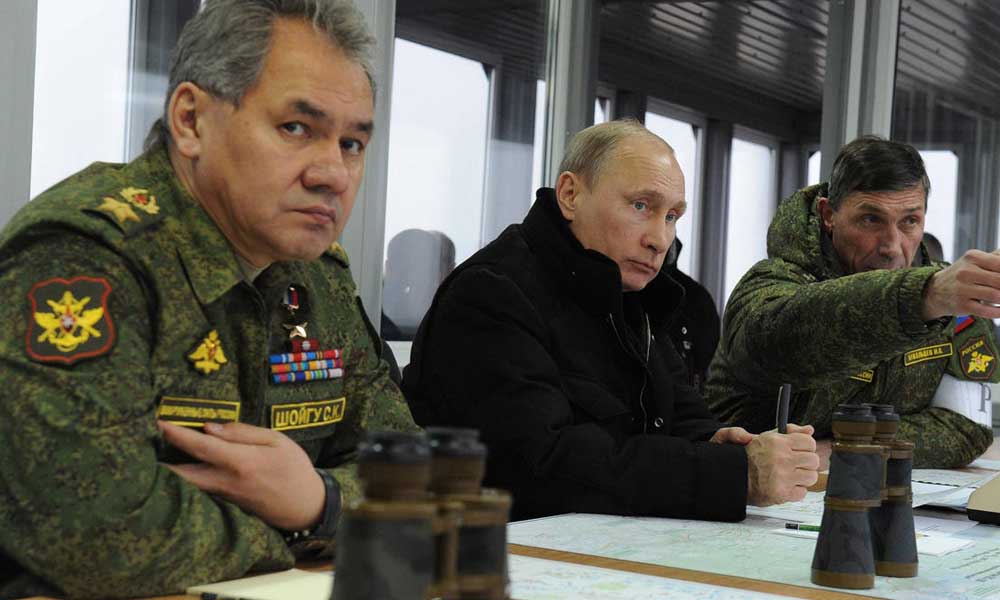
Have Sanctions worked on Putin
In response to the Russian invasion of Ukraine on February 24, 2022, the US and over forty other nations implemented what was described as an unprecedented set of punishing sanctions against Russia. These sanctions were far-reaching and harsh.
At the start, the sanctions included a prohibition on foreign assets and a prohibition on exporting certain technologies to Russia. As 2022 progressed, these sanctions became increasingly tighter, with the European Union completely cutting back on acquiring Russian oil and gas. Additionally, hundreds of Western businesses ceased activities in Russia.
After twelve months of conflict, have sanctions really been successful?
Before the invasion, many Western countries had envisioned the threat of sanctions would be enough to stop Russia from invading Ukraine. However, once the invasion started, the purpose changed to deter Putin from escalating and persuading him to retreat - by cutting off his capacity to pay for his military.
In the beginning, many in the West believed the sanctions were effective.
During the opening days of the conflict, the Russian ruble fell in value due to the exclusion of most Russian banks from the Swift international payment network and the freezing of state assets held in foreign banks, causing panic among the locals.
The Russian central bank swiftly restored the exchange rate to its prewar levels, and inflation peaked at 18% in April before decreasing to 12% in December. Despite this, some Westerners still claimed that the sanctions had a crushing effect on the Russian economy.
The repercussions of the sanctions were heavily felt in specific sectors, such as aviation and vehicle manufacturing, which saw a dramatic drop in output of up to 80% due to a shortage of imported parts. Despite this, Russia's GDP only dropped by 3% in 2022.
Retail sales decreased by 9%, while local brands, Chinese, and Turkish companies replaced the gaps left by departed Western companies in the domestic market.
Despite the restrictions and cost of the offensive, Putin has given no indication he is about to give in. On the contrary, last September, he ordered the mobilization of 300,000 reservists and attempted to disrupt Ukraine's power system with missile and drone strikes.
The Russian economy hasn't collapsed, and some explanations exist.
Energy keeps Russia going
Russia could be spending over US$300 million every day on the war, but for the majority of 2022, it was raking in $800 million daily from energy exports. This was more than enough to maintain living standards and to refill their arsenals of weapons and munitions.
The armed conflict and the reduction of Russian gas shipments to Europe in 2021 caused a sharp increase in oil and gas prices. During the initial month of the war, global oil prices rose by 50%, topping out at $139 a barrel in April, while wholesale gas prices in Europe jumped by 500%, reaching a high of 300 euros ($320) per megawatt-hour, which led to enormous profits for Russia.
In 2022, Russia saw a decrease in the export of its oil and gas to Europe, yet its income still managed to peak at $168 billion - the highest since 2011. At the end of the year, the country's current account surplus was a remarkable $227 billion, the most it had ever been.
Other countries buy from Russia
The 49 countries that sanctioned Russia represent only 60% of the global economy, leaving the remaining 40% of the world open to continuing to trade with Moscow.
The majority of non-Western countries declined to join in the sanctions. Many see the Ukraine conflict as a result of a power struggle and don't blame Russia. In return for a $20 to $30 per barrel markdown, India and China are buying more Russian oil and gas. Turkey has also been a vital ally, seeing their trade with Russia rise 45% in 2022.
Despite their attempts to reduce their purchases from Russia, European states have bought $125 billion of Russian oil and gas since the start of the invasion. China and Turkey were the next biggest buyers, at $50 billion and $20 billion, respectively, with India following at $18 billion.
Russia is used to facing tough challenges.
Observers who predicted Armageddon overlooked the unique characteristics of the Russian economy. Moscow has been getting ready for this war for several years and has adapted to the sanctions that followed the seizure of Crimea in 2014.
The volatile 1990s educated Russian businesses and consumers on adjusting to sudden shocks, such as the extreme inflation that decimated many people's savings or the corporate raiders and tax police who pilfered businesses. As a result, many people developed an attitude of expecting the worst and being ready for it. Overall, they are both able to withstand challenges and hardship and accept lower expectations.
In Russia, the labor market tends to resist the effects of economic downturns by reducing wages rather than making layoffs. Moreover, with 15% of the workforce being migrants, primarily from Central Asia, who can be sent home, then re-employed when needed, the effects on the domestic labor market are minimized.
Those in positions of power remain loyal.
The political reasoning underpinning the decision to initiate sanctions was unsound.
It was theorized that the influential individuals who had been sanctioned would be at risk of losing their wealth and extravagant lifestyles, which would cause them to force Putin to alter his stance to protect their fortunes.
But as Russia is more of a dictatorship, with Putin placing much more emphasis on national power over personal wealth, even after it has been reported that oligarchs have lost around half of their net worth due to sanctions, few voiced criticism. This is likely because they know that any defiance of Putin would lead to losing their businesses in Russia, at least.
It had been anticipated that the economic sanctions would lead to widespread protests among Russians, but that wasn't the case. Protests did occur, but the police quelled them with nearly 20,000 people arrested and a few of the organizers sentenced to eight years in jail.
Many of those against the war opted to leave the country. It is estimated that 500,000 have left, including many tech workers, which will likely hamper Russia's economic growth.
Economic instability
As the conflict stretches on into its 2nd year, there is a possibility that things may change.
It's noteworthy that Russia has stopped issuing most economic reports, so caution should be taken when reviewing the data - and the actual situation could be worse than what the numbers reflect.
European purchases of Russian energy are expected to decrease drastically in 2023. On December 5, 2022, the EU imposed a $60-a-barrel price limit on Russian crude oil, starting from February 5, 2023, which blocks insurance for tankers carrying oil sold above $60.
The Russian federal budget is also feeling the weight of a $47 billion deficit last year, which was covered by the National Welfare Fund, which, by the end of the year, stood at $187 billion.
January 2023 saw an enormous decrease in oil and gas profits, resulting in a deficit of $38 billion in just one month. If the trend persists, the Russian government's ability to fund its war efforts could be hindered as the year progresses.
As things stand now, though, it is evident that the sanctions have not been able to weaken Putin's control nor his determination or capability to continue the war.