English
 Français
 中国人
中国人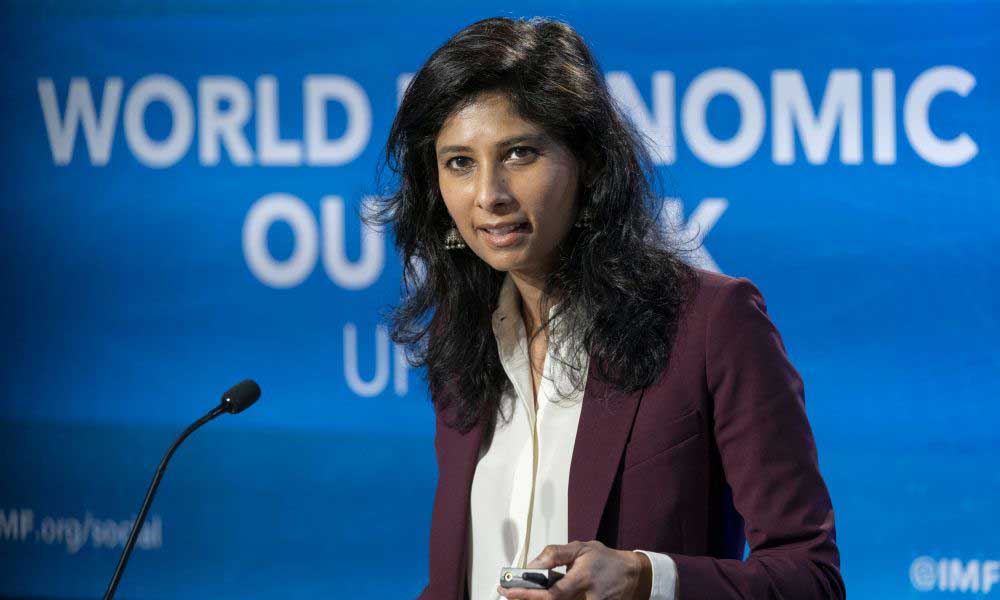
IMF Cautions U.S.-China Rifts Could Undermine Global Economy
The growing divide between the U.S.-led West and the China-aligned blocs means global trade cooperation and economic growth are seriously at risk, according to IMF Deputy Managing Director Gita Gopinath.
Speaking at Stanford University, she said that recent issues such as the pandemic and the invasion of Ukraine have shaken the foundations of international trade relations in a way that reminds her of the Cold War.
Gopinath noted that nations are increasingly driven by the dual imperatives of economic and national security when choosing trading and investment partners, often aligning with either the U.S. or China. This trend, while potentially bolstering economic resilience, poses a threat to the established rules-based global trading system and is a "significant reversal of the gains from economic integration," Gopinath said.
As tensions between Washington and Beijing keep escalating, with the U.S. intensifying trade restrictions and sanctions against China and concerns mounting over Beijing's aggressive actions in the South China Sea and its rhetoric surrounding Taiwan, the discontent has had a ripple effect, with a rise in global trade restrictions.
Data from the IMF shows a threefold increase in trade restrictions between 2022 and 2023 compared to 2019. Trading between the two blocs has also declined, Gopinath pointed out, with the U.S. bloc trading mainly with its allies such as Europe, Canada, Australia, and New Zealand, and China's bloc mainly trading with nations such as Russia, Eritrea, Mali, Nicaragua, and Syria.
The fallout from Ukraine's invasion has only helped to widen these divides and led to a 12% drop in trade between the blocs and a 20% decrease in foreign direct investments. China has been particularly impacted, seeing a 26% drop in foreign direct investment in the first quarter of 2024 alone.
Despite these growing rifts, Gopinath stressed that the global economy is more intertwined and dependent on trade now than it was during the Cold War. The IMF predicts that if these divides continue unchecked, global GDP could shrink by up to 7% under the severest fragmentation scenarios, with even mild divisions potentially reducing GDP by about 0.2%.
Low-income nations, heavily reliant on agricultural imports and foreign investments, stand to lose the most in such a fractured economic landscape. However, Gopinath remains hopeful, citing the stabilizing role of neutral "connector" countries like Mexico and Vietnam. These nations, through their economic and diplomatic influence, are critical in maintaining global integration and offering alternative pathways for trade and investment.